
Australian Merger Statistics
Your Local Experts in Merger Analysis
Brattle’s Sydney-based team assists clients in evaluating the competitive effects of mergers and acquisitions by providing rigorous economic advice, advanced data analytics, and cost analysis. We have hands-on experience of all steps of the merger review process, with the ability to use cutting-edge tools to analyse complex datasets.
We provide clear, timely, and practical advice to clients on the best approaches to assess the competitive effects of mergers, tailored to the particular characteristics of the industry involved and the available public and private information and data. We are highly familiar with the approaches of the Australian Competition and Consumer Commission (ACCC) and other competition authorities, and apply global best practices in merger assessment.
We draw on expertise in economics, data analytics, accounting, surveying and econometrics, and collaborate closely with world-class experts across our international offices. Please contact [email protected] for more information.
Learn More About Our Antitrust & Competition Expertise in Australia
Analysis of ACCC’s Merger Statistics
Below is an analysis of mergers notified to the ACCC, including:
- how many mergers and waivers are being notified;
- how long is the ACCC taking to review mergers and waivers;
- what industries are notifying mergers and waivers;
- what are the outcomes of the merger and waiver reviews;
- where, when, and why are waivers being rejected; and
- how does the ACCC’s actual cost recovery compare with its forecasts.
This analysis includes data for:
- notified acquisitions – which we term ‘mergers’;
- applications for notification waivers – which we term ‘waivers’.
We welcome feedback and ideas for further analysis. All the data used in the analysis below is sourced from the ACCC’s acquisition registers, available here. We used the data available as at October 1 2026.
1. How many mergers are being notified?
The ACCC estimated that it would conduct 8.3 waiver reviews and 27.9 phase 1 merger reviews per month (see Consultation Paper).
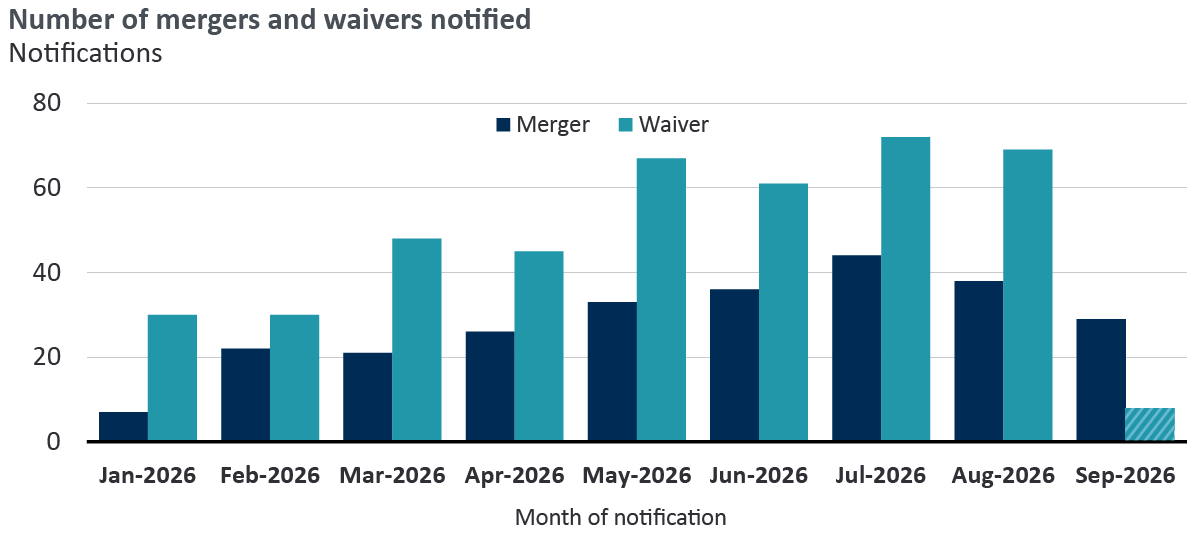
Note: we do not include any mergers that have been notified but subsequently the ACCC has said the notification was not effective. The number of waivers notified in the most recent month may increase as they can be added to the register a few weeks after they are notified. Note that the number of merger notifications and waivers is not final. Shaded areas indicate provisional figures.
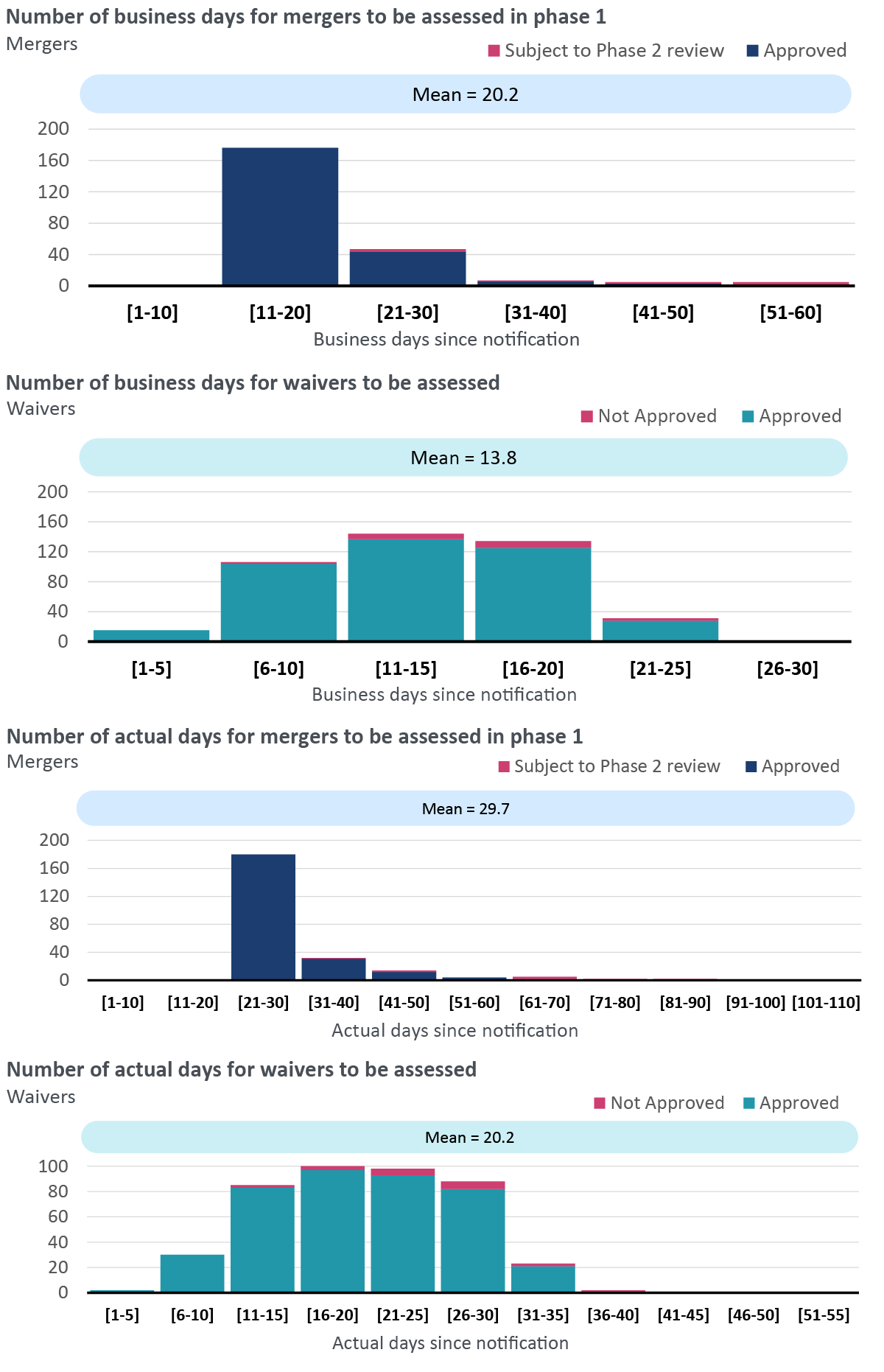
2. How long is the ACCC taking to review mergers and waivers?
2.1 – how long do ACCC assessments take
2.2 – how have assessment times changed over time
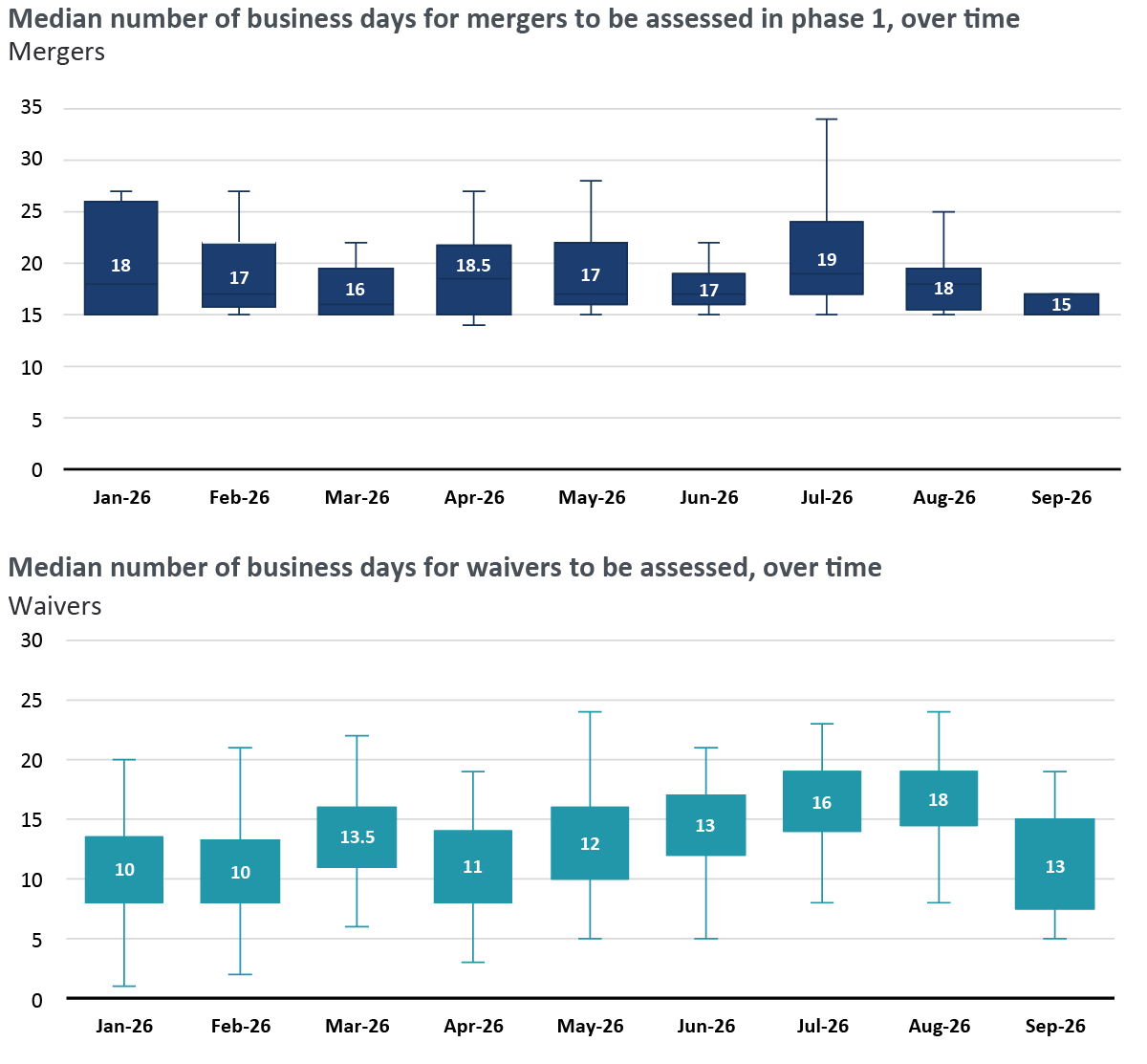
Note that the number of waivers is not final.
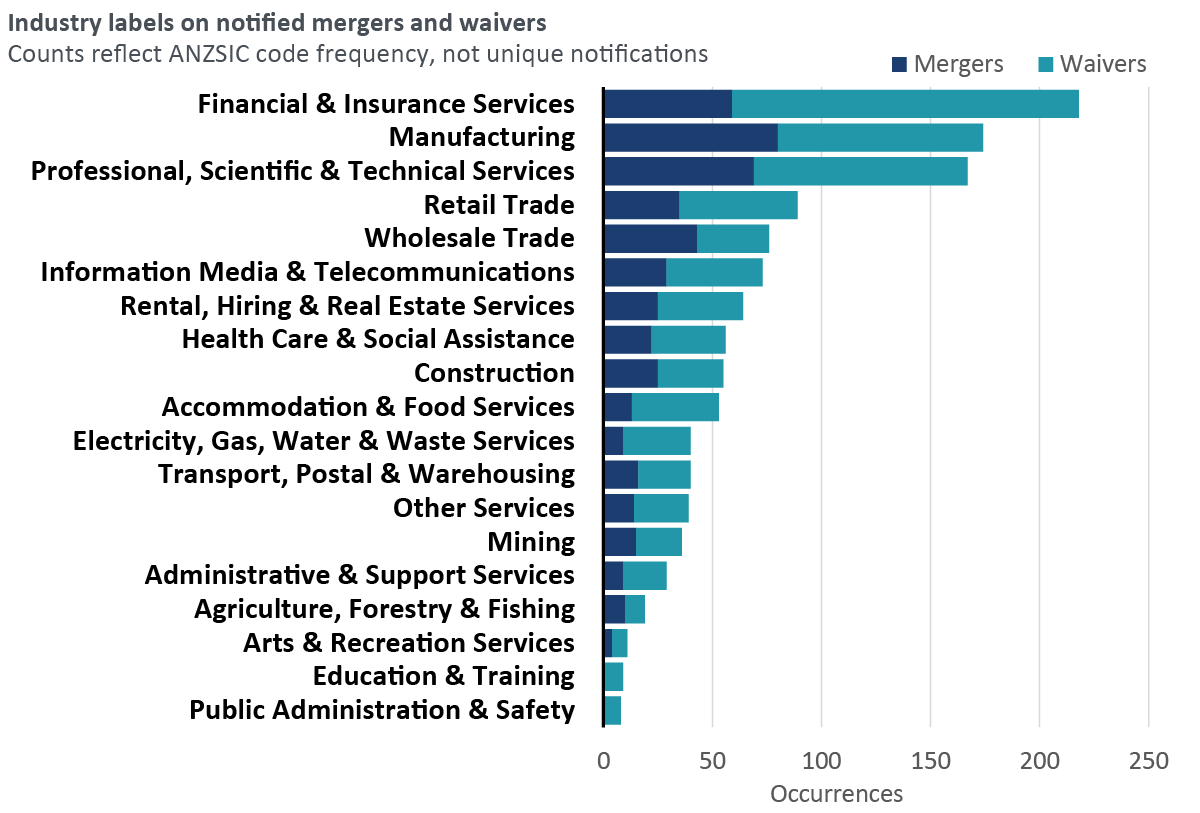
3. What industries are notifying mergers and waivers?
4. What are the outcomes of the merger and waiver reviews?
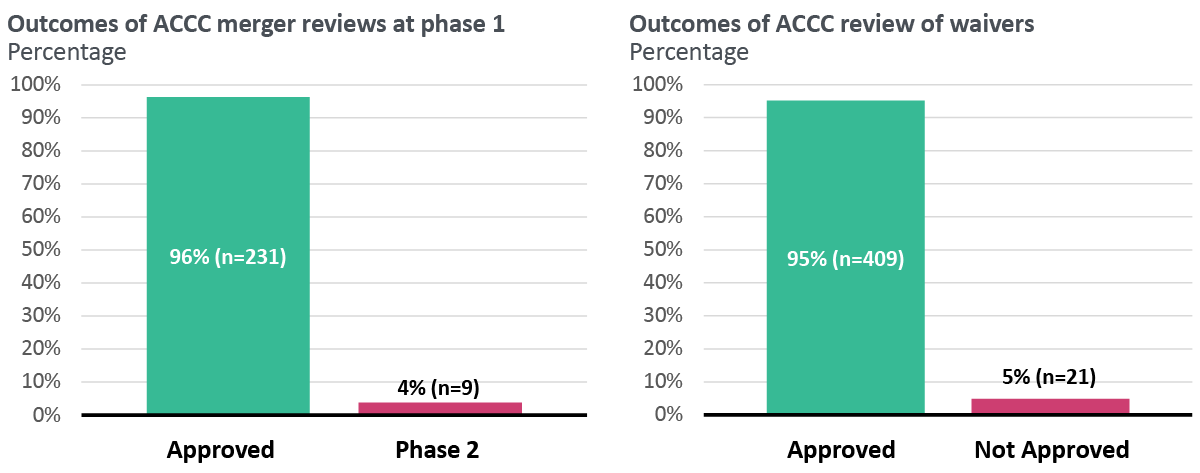
5. Where, when, and why are waivers being rejected?
5.1 – which industries have the highest waiver rejection rates
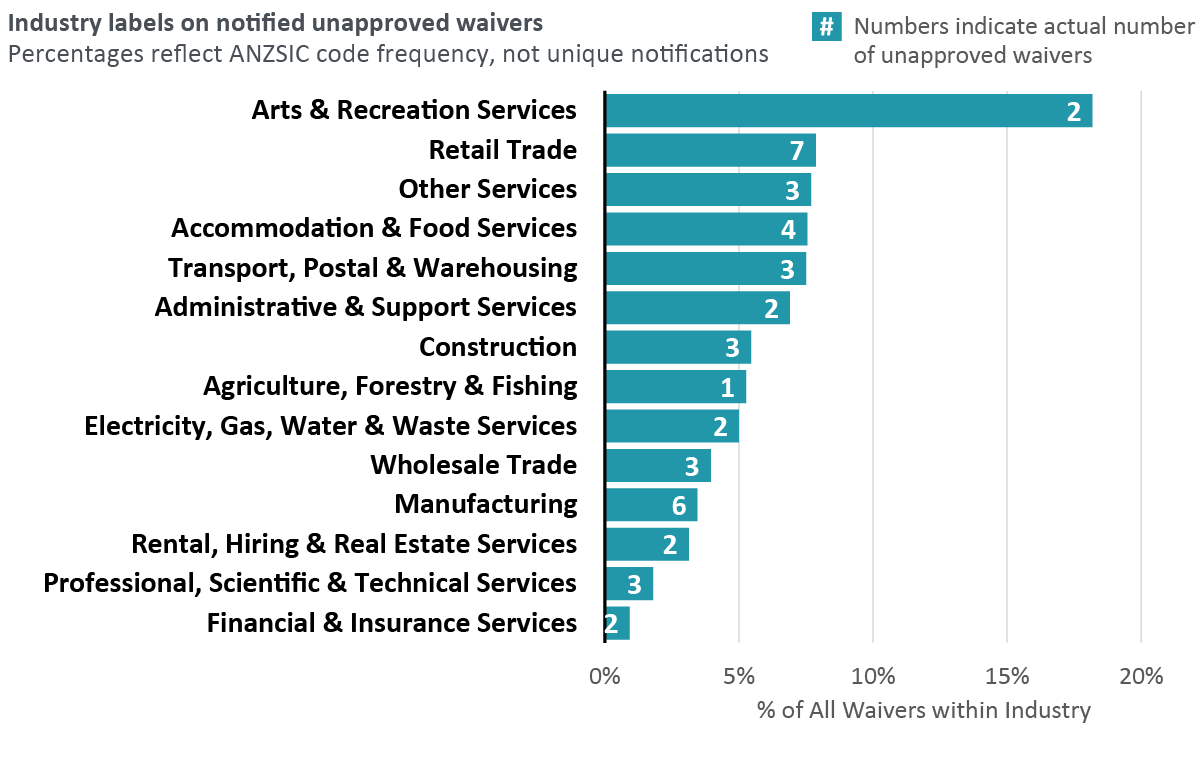
5.2 – how has the waiver rejection rate changed over time
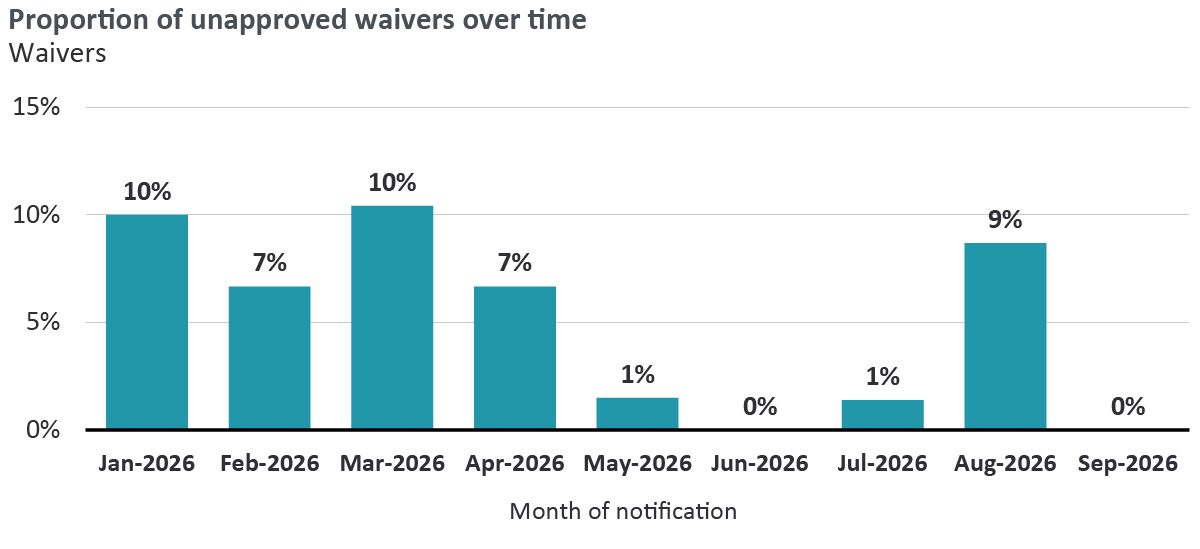
Note that the number of waivers is not final. Shaded areas indicate provisional figures.
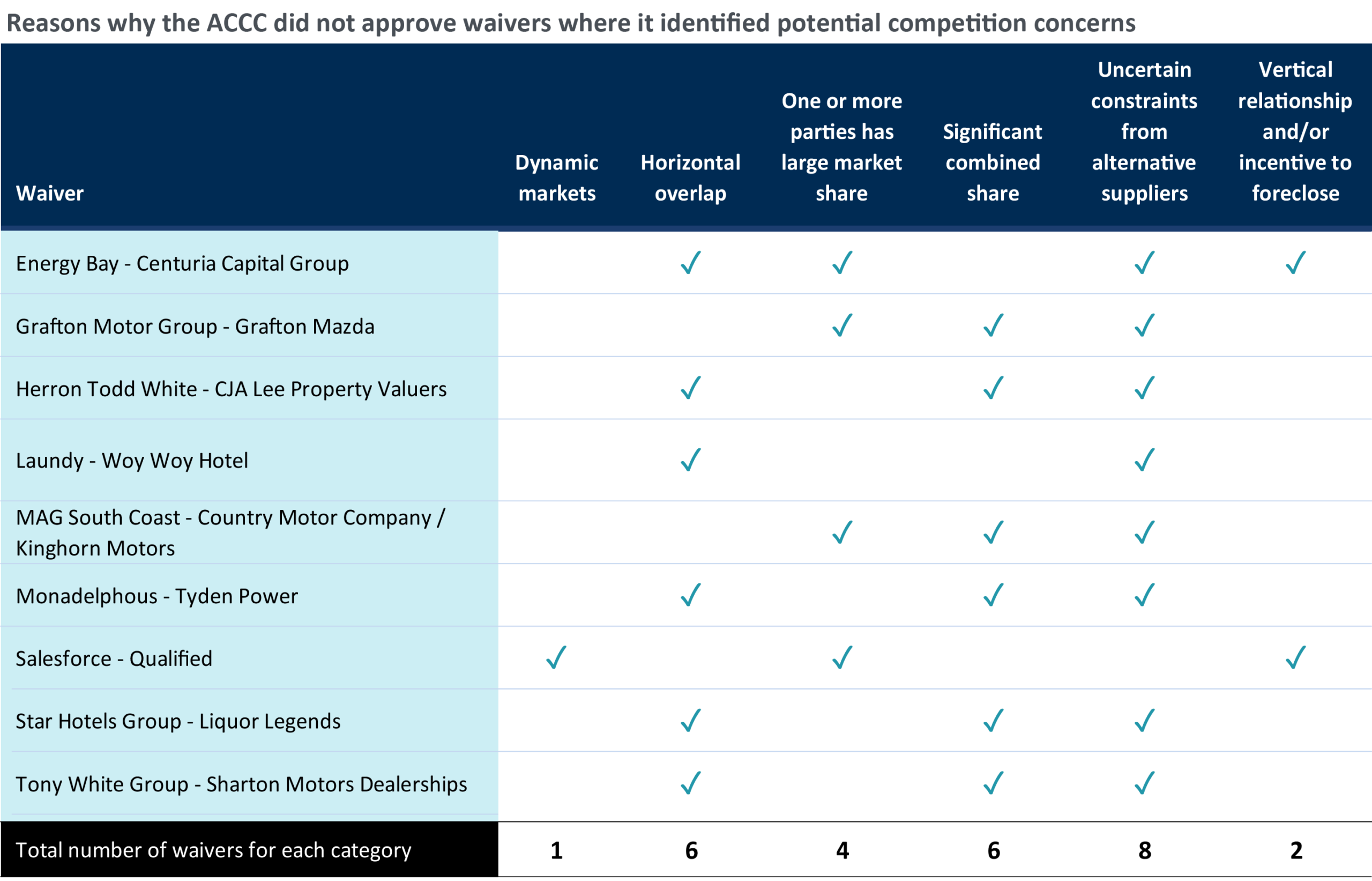
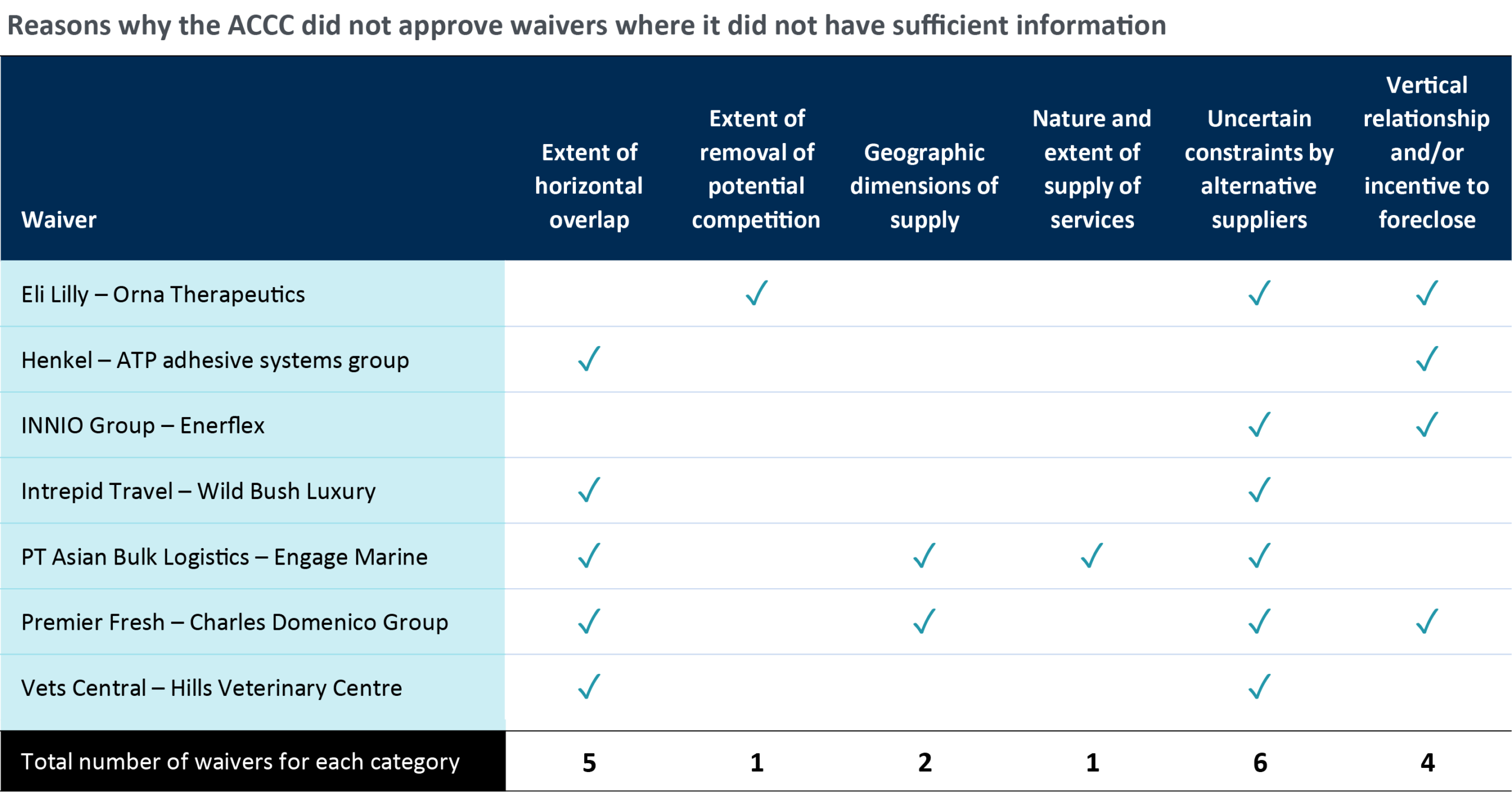
5.3 – why are waivers being rejected
Broadly speaking there are two reasons why the ACCC does not approve waivers, ie, the ACCC considers that:
- there are potentially competition concerns in relation to the merger; or
- not enough information has been provided for it to approve a waiver.
We set out below the factors that contributed to the ACCC’s decision in relation to both types of conclusions.
6. How does the ACCC’s actual cost recovery compare with its forecasts?
Our estimates of the costs recovered by the ACCC from 1 January 2026 to 30 June 2026 are approximately $5 million less than the ACCC’s forecasts. This could lead to changes in the merger fees going forward.
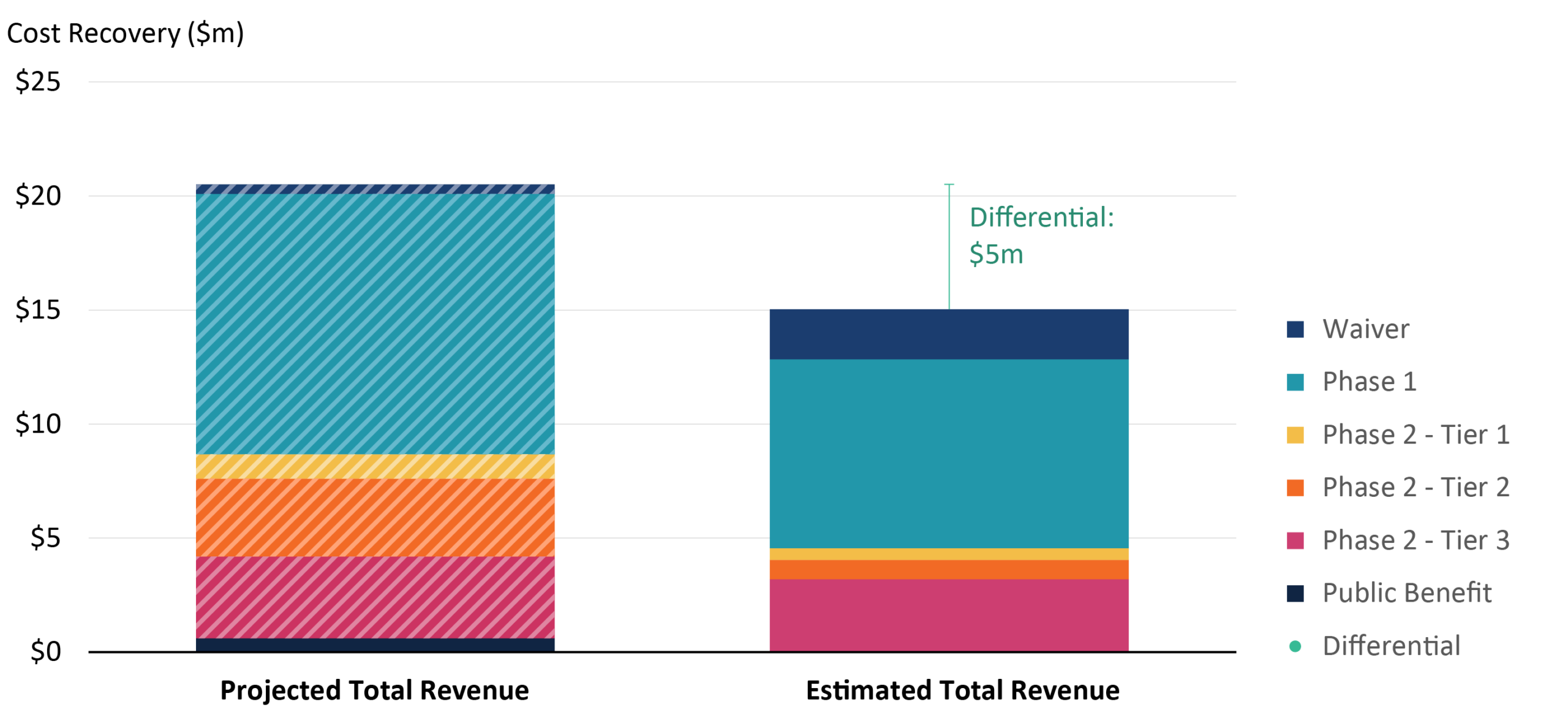
Source and notes: ACCC, Cost Recovery Implementation Statement: Merger control regime for the charging period 1 July 2025 to 30 June 2026 (2025). Available from: https://www.accc.gov.au/system/files/merger-control-regime-cost-recovery-implementation-statement-2025-26.pdf. Note that the number of waivers is not final.
Contact Our Experts
-
Principal
-
Sydney
Dr. Wainscoat is an economist specializing in competition, regulatory, and damages matters in Australia and New Zealand.
