
Real Reliability:
The Value of Virtual Power
In the past decade, the US has spent over $120 billion on 100 GW of new generation capacity, with the primary purpose of providing resource adequacy. However, more will be needed, particularly due to decarbonization initiatives that will enable electrification and retire fossil fuel-based generation. In this study, we explore the cost and ability to serve critical resource adequacy needs from an emerging resource: virtual power plants (VPPs).
A VPP is portfolio of distributed energy resources (DERs) that are actively controlled to provide benefits to the power system, consumers, and the environment. Examples of potential elements are mentioned below.
How a VPP Works
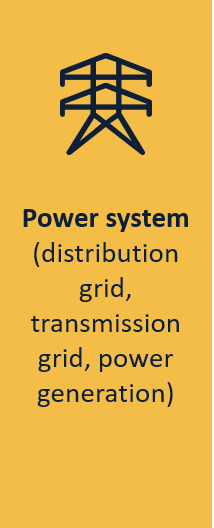
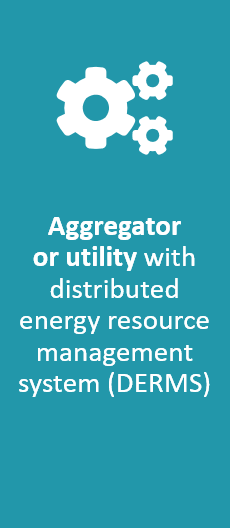
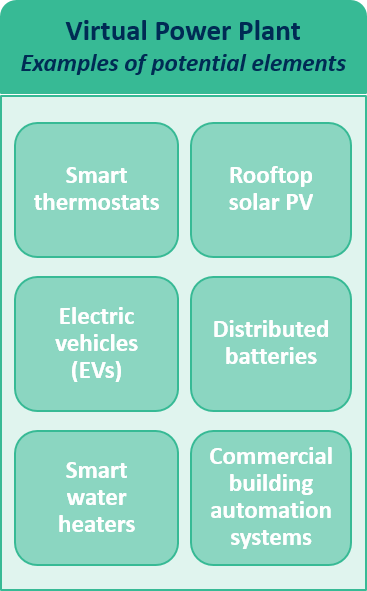
Note: VPPs can be composed of many distributed technologies. As described later, the VPP modeled in this study is composed of a subset of the options shown here.
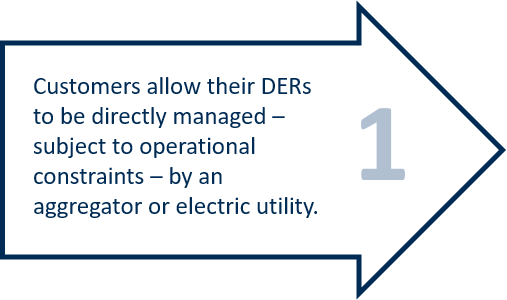
Customers allow their DERs to be directly managed – subject to operational constraints – by an aggregator or electric utility.
1
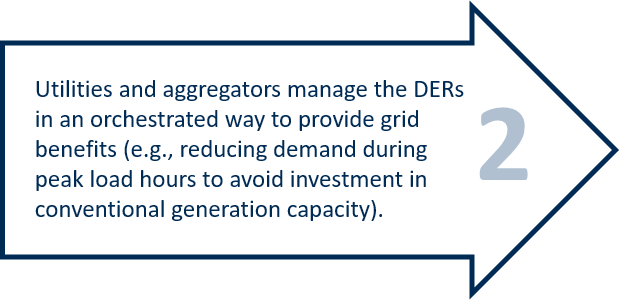
Utilities and aggregators manage the DERs in an orchestrated way to provide grid benefits (e.g., reducing demand during peak load hours to avoid investment in conventional generation capacity).
2
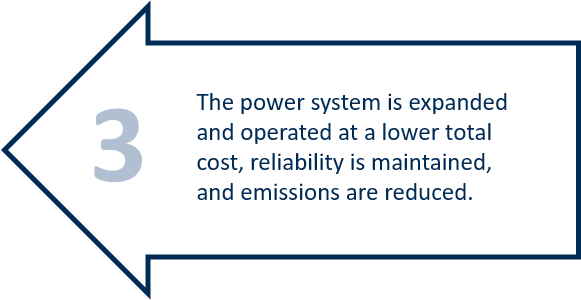
The power system is expanded and operated at a lower total cost, reliability is maintained, and emissions are reduced.
3
The cost savings provided by the VPP are shared between the individual participants, the aggregator, the utility, and society broadly.
4
Note: See technical appendix for a complete description of modeling assumptions and data sources.
The value of each resource is subtracted from its all-in cost to arrive an estimate of the net cost of providing 400 MW of resource adequacy from each resource type.
Calculate net
cost of each resource type
6
The all-in cost of each resource type includes CapEx, fuel, and ongoing program costs, and is sourced from publicly available data.
Estimate total
cost of each resource type
4
Each resource must be available with sufficient generation or load reduction capability during the top system net load hours of the year.
Determine MW of each resource type needed
3
Each resource must provide 400 MW of resource adequacy. This is approximately 7% of the gross system peak for the illustrative utility.
Establish system resource adequacy need
2
The prototypical
U.S. utility is defined using publicly available data.
We conservatively assume operationally challenging conditions for a VPP.
Define utility
system
1
We compare the net cost of providing 400 MW of resource adequacy from three resource types: a natural gas peaker, a transmission-connected utility-scale battery, and a VPP. Our methodology is illustrated below.
Study Methodology
Resource Adequacy… For Cheap
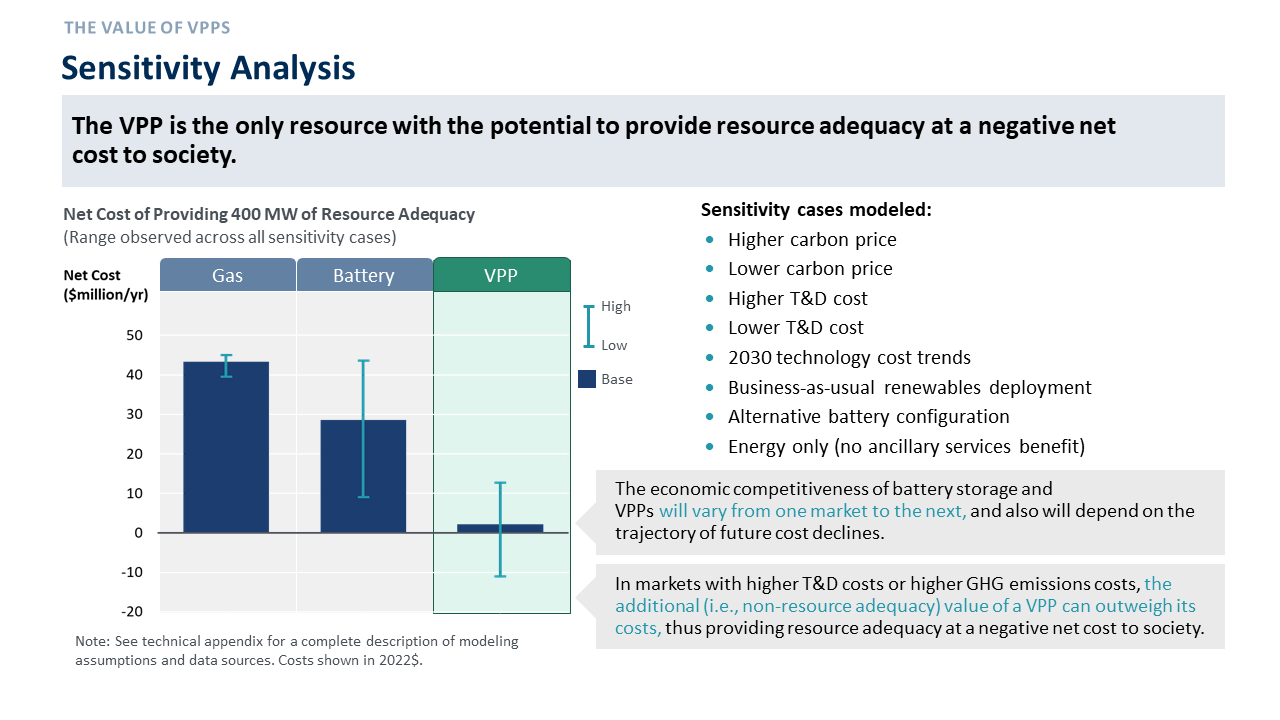
The VPP provides the same resource adequacy at a significant cost discount relative to the alternatives.
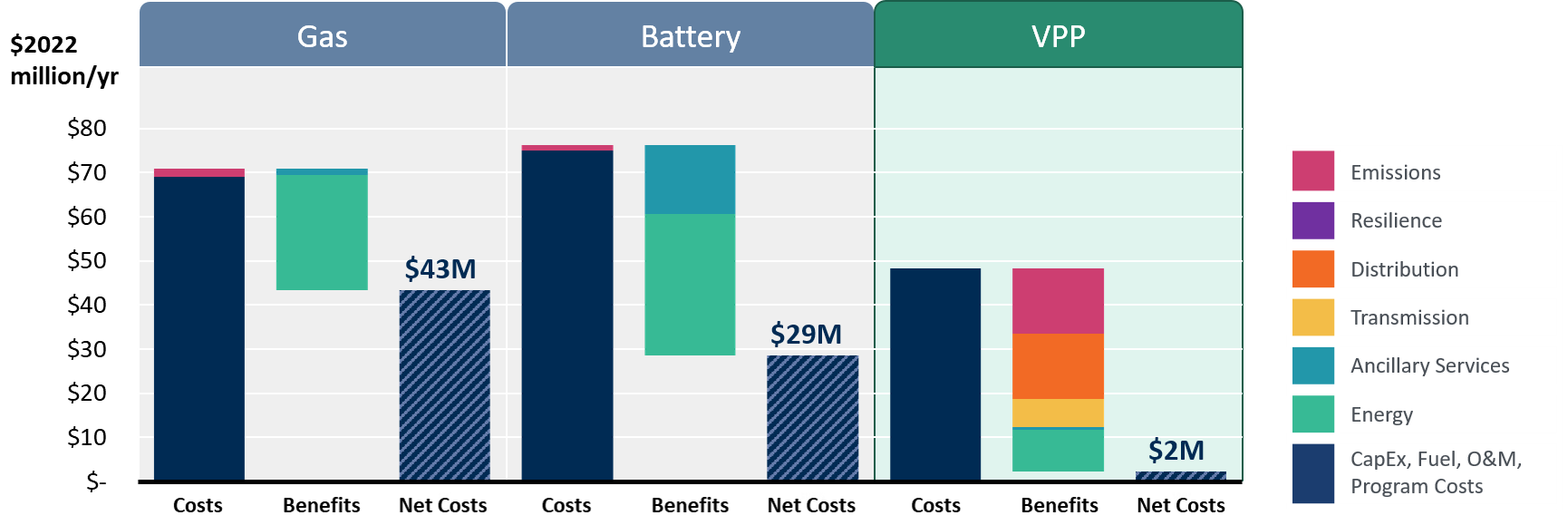
Annualized Net Cost of Providing 400 MW of Resource Adequacy
Key Findings
Additional benefits
When accounting for additional societal benefits, the VPP is the only resource with the potential to provide resource adequacy at negative net cost. 60 GW of VPP could provide over $20 billion in additional societal benefits over a 10-year period.
Cost savings
Excluding societal benefits (i.e., emissions and resilience), the net cost to the utility of providing resource adequacy from the VPP is only roughly 40% to 60% of the cost of the alternative options. Extrapolating from this observation, a 60 GW VPP deployment could meet future resource adequacy needs at a net cost that is $15 billion to $35 billion lower than the cost of the alternative options over the ensuing decade (undiscounted 2022 dollars).
Real reliability
A VPP that leverages residential load flexibility can perform as reliably as conventional resources and contribute to resource adequacy at a similar scale.
Read more
Read more
Read more
Additional Unquantified Benefits of VPPs
VPPs can provide several additional major benefits not modeled in this study.
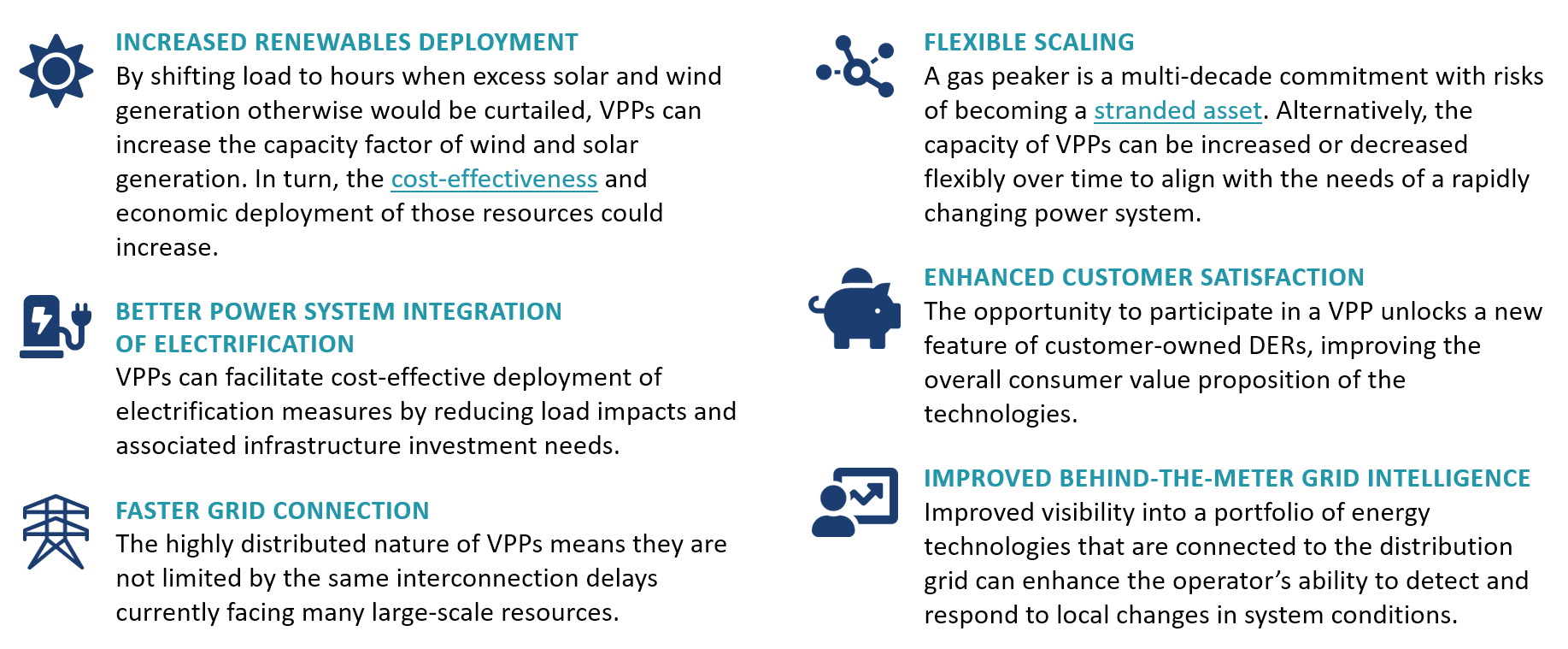
INCREASED RENEWABLES DEPLOYMENT
By shifting load to hours when excess solar and wind generation otherwise would be curtailed, VPPs can increase the capacity factor of wind and solar generation. In turn, the cost-effectiveness and economic deployment of those resources could increase.
BETTER POWER SYSTEM INTEGRATION
OF ELECTRIFICATION
VPPs can facilitate cost-effective deployment of electrification measures by reducing load impacts and associated infrastructure investment needs.
FASTER GRID CONNECTION
The highly distributed nature of VPPs means they are not limited by the same interconnection delays currently facing many large-scale resources.
FLEXIBLE SCALING
A gas peaker is a multi-decade commitment with risks of becoming a stranded asset. Alternatively, the capacity of VPPs can be increased or decreased flexibly over time to align with the needs of a rapidly changing power system.
ENHANCED CUSTOMER SATISFACTION
The opportunity to participate in a VPP unlocks a new feature of customer-owned DERs, improving the overall consumer value proposition of the technologies.
IMPROVED BEHIND-THE-METER GRID INTELLIGENCE
Improved visibility into a portfolio energy technologies that are connected to the distribution grid can enhance the operator’s ability to detect and respond to local changes in system conditions.




MARKET DESIGN
-
Wholesale markets provide a level playing field for demand-side resources
-
Retail rates and programs incentivize participation in innovative, customer-centric ways
REGULATORY FRAMEWORK
-
Utility business model incentivizes deployment of VPPs wherever cost-effective
-
Utility resource planning and evaluation accounts for the full value of VPPs
POLICY SUPPORT
-
Codes and standards promote deployment of flexible end-uses
-
R&D funding supports removal of key technical barriers
TECHNOLOGY INNOVATION
- DERs are widely available and affordable. DERs can communicate with each other and the
system operator -
Algorithms effectively optimize DER use while maintaining customer comfort and convenience
The Ideal Conditions for VPP Deployment
Innovation in technology, markets, policy, and regulation can enable VPP deployment.


Maximized
VPP Value
Unique features of this study:
- Hourly reliability assessment, to ensure VPPs are evaluated on a level playing field with alternatives
- Realistic representation of VPP performance characteristics and achievable levels of adoption
- Analysis of net benefits, with comprehensive accounting for VPP costs
- Focus on commercially-proven residential demand flexibility
Prepared for

authors
about brattle
The Brattle Group answers complex economic, regulatory, and financial questions for corporations, law firms, and governments around the world. We aim for the highest level of client service and quality in our industry.
We are distinguished by our credibility and the clarity of our insights, which arise from the stature of our experts; affiliations with leading international academics and industry specialists; and thoughtful, timely, and transparent work. Our clients value our commitment to providing clear, independent results that withstand critical review. Brattle has 500 talented professionals across North America, Europe, and Asia-Pacific.


Kate Peters
Energy Associate
Ryan Hledik
Principal