
Over the past five years, electricity prices have risen faster than an already elevated rate of inflation, increasing household electricity bills and putting renewed pressure on utilities, regulators, and policymakers to address affordability. The purpose of this study is to evaluate how aggregating flexible household technologies—including smart thermostats, electric vehicles, and behind-the-meter batteries—could reduce system costs and translate those savings into lower electricity bills for customers.
Prepared by
The Affordability Advantage:
How Virtual Power Plants Can Alleviate Household Electricity Bill Pressure
Prepared FOR
Everyday Electric
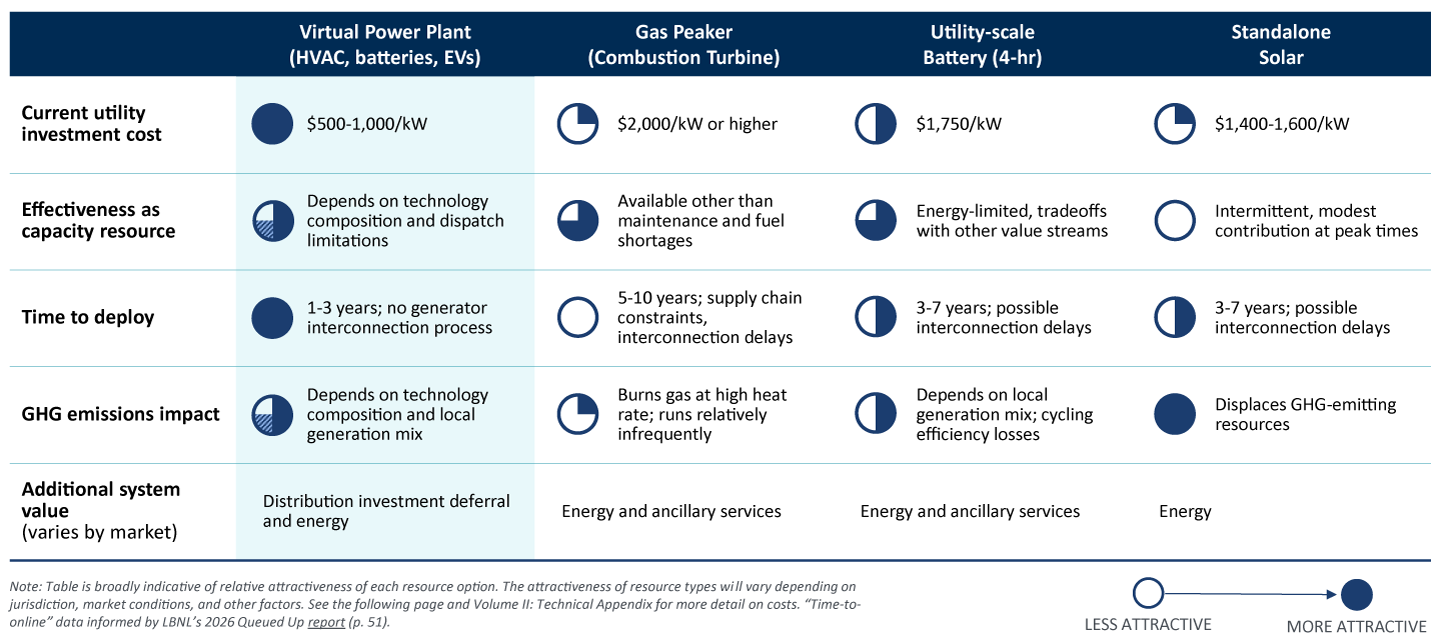
VPPs are among the fastest, cleanest, and least expensive forms of new capacity
VPPs are uniquely positioned to address current challenges
Study Methodology
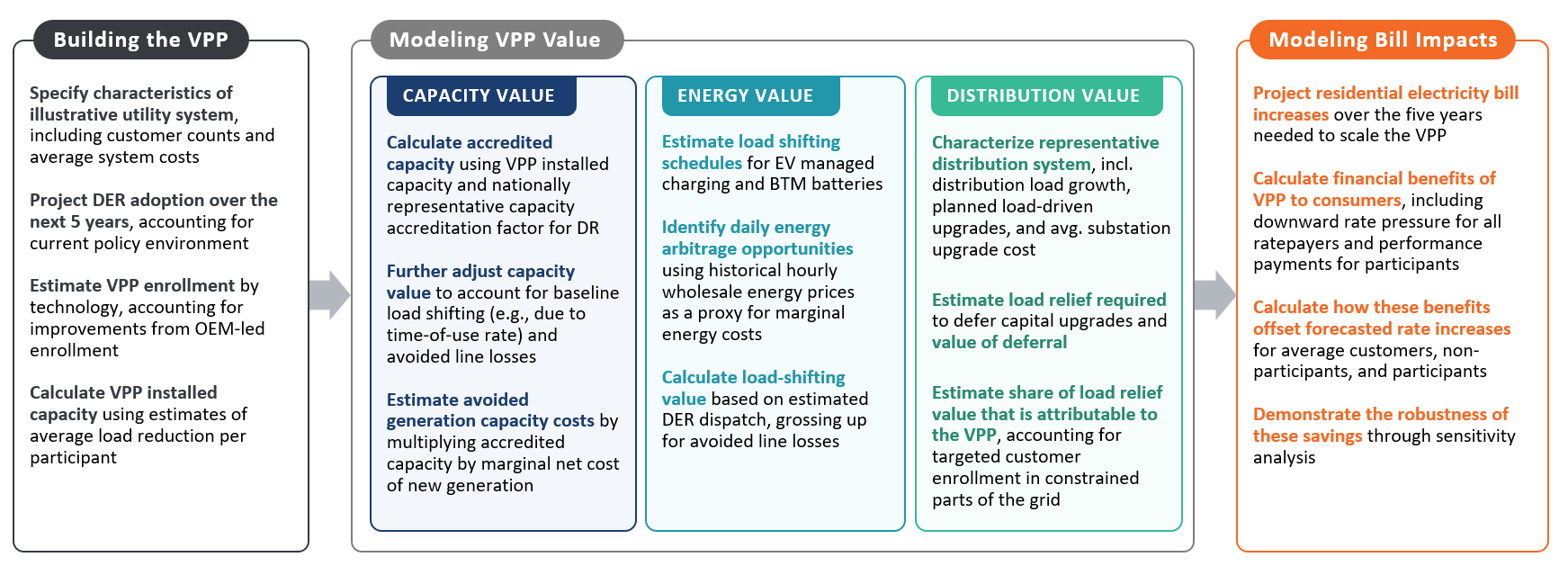
For an illustrative, 1-million residential customer utility, we estimate the scale a VPP could reach within the next five years using OEM-led enrollment strategies, and show how this value translates into affordability benefits for ratepayers and participants.
Study Methodology
For an illustrative, 1-million residential customer utility, we (1) estimate the scale a VPP could reach within the next five years using OEM-led enrollment strategies, (2) calculate the value the VPP can provide, and (3) show how this value translates into affordability benefits for ratepayers and participants.
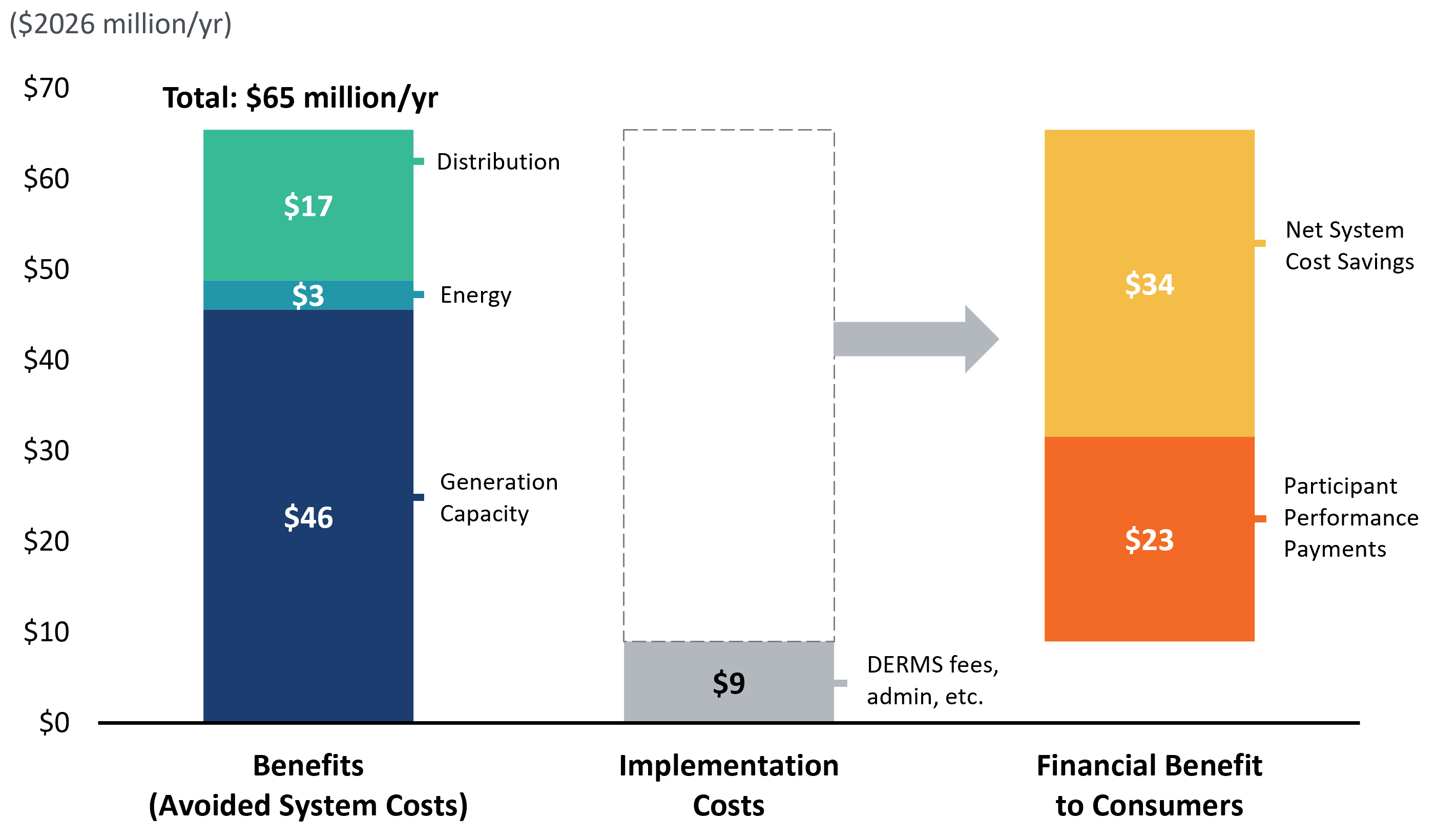
The total value created by the VPP is over 7 times the cost of enabling it. Further, the primary “cost” of the VPP is not really a cost at all, but a performance payment to participating households. The result is that the vast majority of the value created by the VPP goes to consumers.
The VPP Generates Significant Financial Benefits to Consumers
The VPP Cuts Expected Household Electricity Bill Increases in Half
Brattle analyzes trading records, communications, order and execution data, account history, compensation and vesting information, and relevant market data. The trades at issue are evaluated in the context of prior activity, taking into consideration liquidity needs, diversification, hedging, taxes, existence of trading plans, and other possible factors affecting trading decisions. Brattle also quantifies alleged gains or losses avoided under appropriate alternative assumptions.

Evaluating trading patterns and economic benefit
Daily and intraday event studies help assess whether the alleged information led to a statistically and economically significant price response. Our analysis considers event windows, benchmark models, information leakage, delayed reactions, market conditions, and confounding news. This work helps determine whether an observed price movement can reasonably be linked to the alleged material nonpublic information.

Assessing market reaction and materiality
Our experts analyze the information available to the market before and during the alleged trading period, including public filings, earnings materials, analyst research, news, rumors, industry developments, and macroeconomic information. We evaluate what the market already knew or expected, whether the alleged information added anything new, and whether other information better explains the market response.

Analyzing the total mix of information
Brattle's experience across regulatory investigations, enforcement proceedings, civil litigation, and criminal cases informs every stage of our analysis. Our experts understand how allegations are developed, how economic and market evidence is evaluated, and how analytical findings are tested throughout an investigation or litigation. This perspective helps us focus on the questions that matter most to regulators, prosecutors, counsel, and courts.
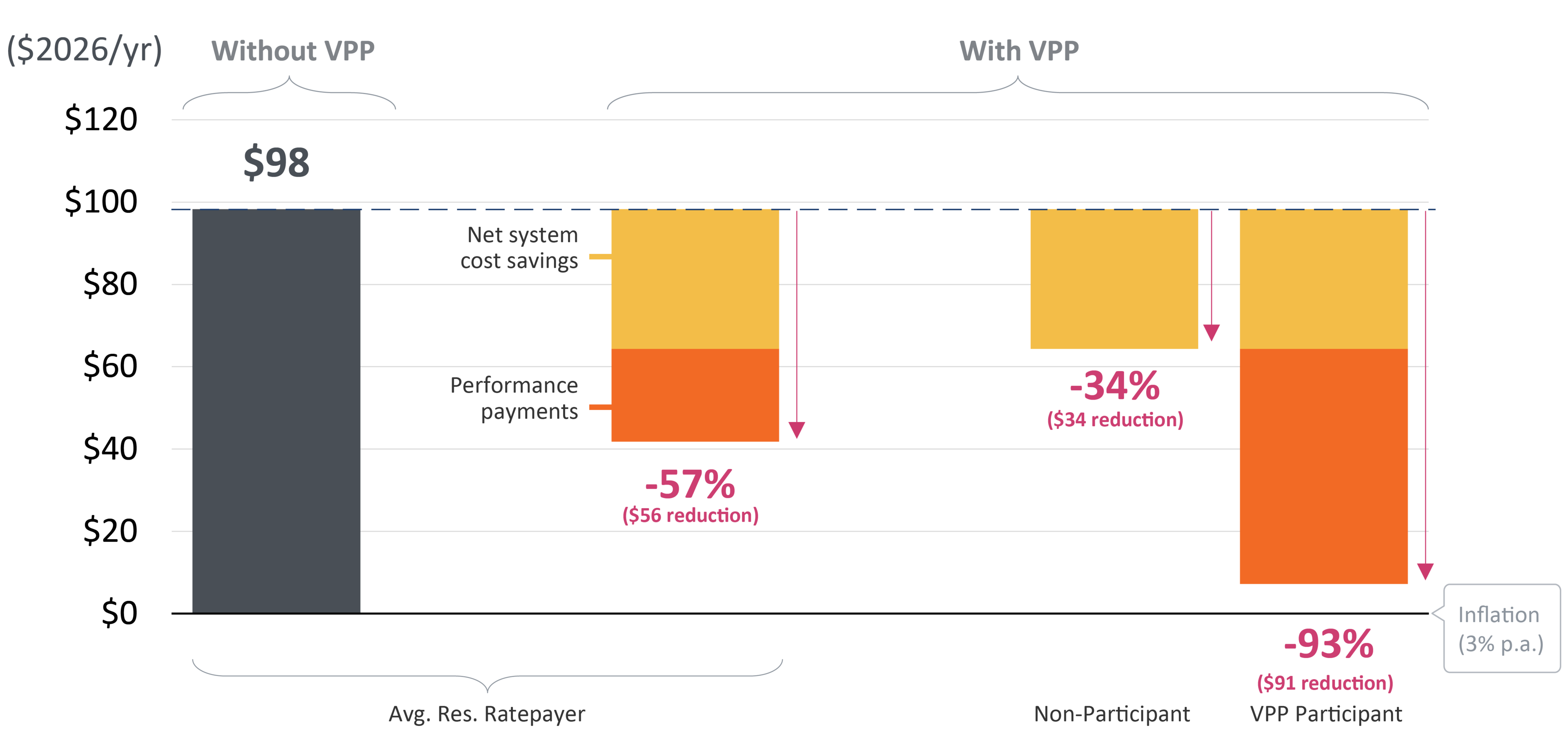
By the time the VPP reaches scale (approximately five years), it reduces bill increases for average households by more than half. Bill increases are almost completely offset for VPP participants in inflation-adjusted terms.
Based on recent trends, we consider a forward-looking scenario in which, absent the deployment of a VPP, retail electricity bills continue to grow at a pace that is 1% per year faster than inflation. At this rate of growth over 5 years, average annual household bills will be nearly $100 greater than today in inflation-adjusted terms.
The net value of the VPP (avoided resource costs net of performance payments and implementation costs) flows through to residential rates, saving all households money on their electricity bill. Since a significant share of the customer base participates in the VPP, customers see a sizable payment on average.
Non-participating households do not receive performance payments, but still avoid a third of the bill increase through net system cost savings that flow through to all ratepayers.
Bill growth for participating households is almost entirely offset in inflation-adjusted terms.
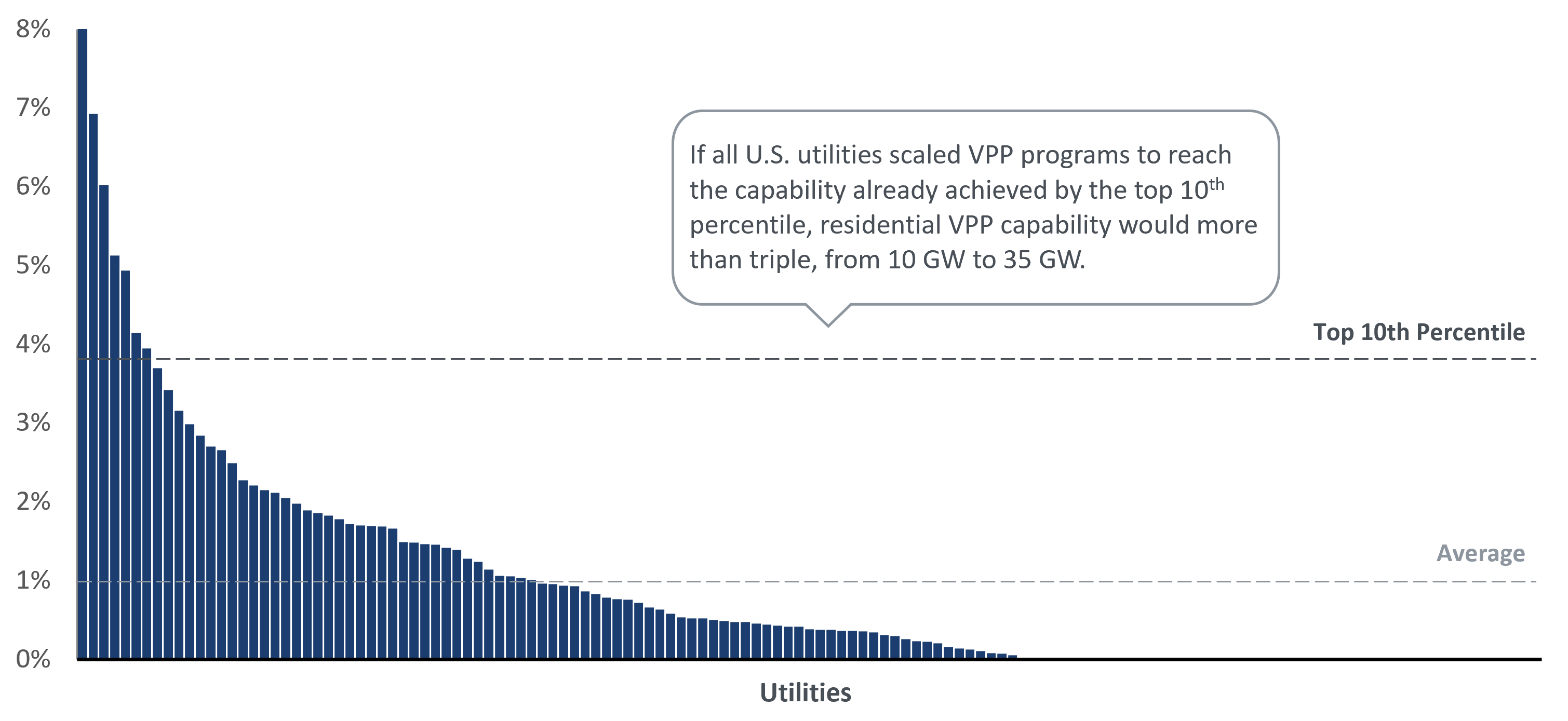
If all utilities were to achieve a 4% system peak reduction from residential VPPs, national capability would more than triple, from 10 GW to 35 GW, generating an additional $4–7 billion per year in financial benefits for households.
“Utility-Scale” VPPs can be Achieved through Enhanced Enrollment
Read Anytime, Anywhere
Access the PDF version of our guide for easy offline viewing and sharing. To learn more, please contact our report authors.
authors
about brattle
The Brattle Group is a premier global consulting firm specializing in economics and finance. With more than 550 professionals across North America, Europe, and Asia-Pacific, and a distinguished network of leading academics and industry experts, we bring analytical rigor, credibility, and clarity to complex challenges. For decades, clients have trusted Brattle for independent analysis in litigation, energy and financial markets, and regulatory and strategic advisory settings.
For additional information about our experts and services, please visit brattle.com.
Defined by excellence and committed to delivering clarity in the face of complexity.


Financial
Investigations
White-collar cases that allege covert or illicit schemes are often ultimately exposed or explained through analysis of financial records other than company financial statements. In the simplest examples, financial analysis may show whether investor funds were used for their stated purpose. More elaborate schemes may involve trading strategies; bribery; false claims; money laundering; start-ups, initial coin offerings (ICOs), or reverse mergers that are, in fact, pump-and-dump schemes; or classic Ponzi schemes in which the most recent duped investors’ funds are used to pay off earlier investors as well as enriching perpetrators.
In such cases, Brattle experts assist investigators and defense counsel by organizing and analyzing financial records, such as bank statements, brokerage accounts, trading data, and wire transfers. Increasingly, financial records include public and private blockchain activity and cryptocurrency wallets. Our analysis may also integrate email, phone calls, texts and IMs, SWIFT messages, and other communication media to link financial activity with specific stated purposes and individuals.
Representative Engagements
Representative Engagements
Representative Engagements
Representative Engagements